Inventor Inquiry Three — THE EVIDENCE

Third in a 101-part series of questions every creator should answer before spending another dollar.
The Question: How do you know the problem is real?
You have identified a problem.
You have an idea who has the problem.
Now comes a question that can make an otherwise enthusiastic inventor suddenly very interested in changing the subject:
How do you know?
“Well, it happened to me.”
“Everybody I’ve talked to loves the idea.”
“My brother-in-law says I should patent it immediately.”
All worth hearing.
But what, exactly, do they establish?
Your experience tells you the problem happened to you. Encouragement tells you someone wants you to keep going. Your brother-in-law may be an excellent brother-in-law.
You still need hard evidence.
BE SHERLOCK
Start with what happens before your invention enters the conversation. Look for the clues.
When does the problem occur?
How often?
What does it prevent someone from doing?
What happens next?
A problem usually leaves something you can investigate.
Lost time. Wasted material. An extra trip. A task left unfinished. A repair someone keeps making because replacing the whole thing costs too much.
Look for those telltale traces.
Suppose someone tells you a particular package is difficult to open.
That is a useful beginning.
Now suppose you watch that person fetch scissors, struggle with the packaging, spill part of the contents, and, as a last resort, ask for help... or give it to someone else to finish.
You have learned considerably more.
You have seen the circumstances, the workaround, and some of the consequences.
You still don’t know how common the experience is. Or whether your invention would improve it enough to justify buying it.
But you have something more substantial than a nod.
WHAT DOES YOUR EVIDENCE ACTUALLY SAY?
Different observations support different conclusions.
A complaint tells you someone is dissatisfied.
A repeated workaround suggests the difficulty matters enough to make an effort.
Money spent on an existing remedy tells you someone has been willing to pay for help.
None of those observations automatically tells you how many customers you have.
Or what they would pay you.
Or whether your solution is the one they want.
Be careful about making a small piece of evidence into a large conclusion.
“It happened to three people” can quietly become “Everybody needs this” somewhere between the notebook and the business plan.
Keep your assumptions in check.
CHALLENGE
Try asking questions that leave space for an inconvenient answer.
“Tell me about the last time this happened.”
“What did you do?”
“Was that good enough?”
“What happened when you left it alone?”
These questions invite people to describe their experience.
“Wouldn’t this be better with my invention?” invites them to agree with your experience.
There is a difference.
Also talk with people who encounter the same situation and manage it comfortably. They may know something you don’t.
Perhaps an inexpensive solution already exists.
Perhaps the problem occurs only under particular conditions.
Perhaps the people who struggle most are different from the people you expected.
Those are useful discoveries, even if they interfere with a perfectly good sales pitch.
Before you begin, write down what finding would make you reconsider your idea.
Otherwise, you may discover that every answer somehow confirms it.
Inventors are creative people.
We can be particularly creative with evidence we don’t like.
A TRUE STORY
Every once in a while I find — or someone sends me — a product that is so fascinating I just stop in wonderment. How did they design this thing? How did they manufacture it to work so elegantly? I wonder how they afforded to bring it to market… or did they license it?
And, what evidence did they have that it would sell at all?
I don’t always know the whole story… sometimes I only know what sits in my hands.
Consider the item below. Evidently it’s still selling for about $33 retail.
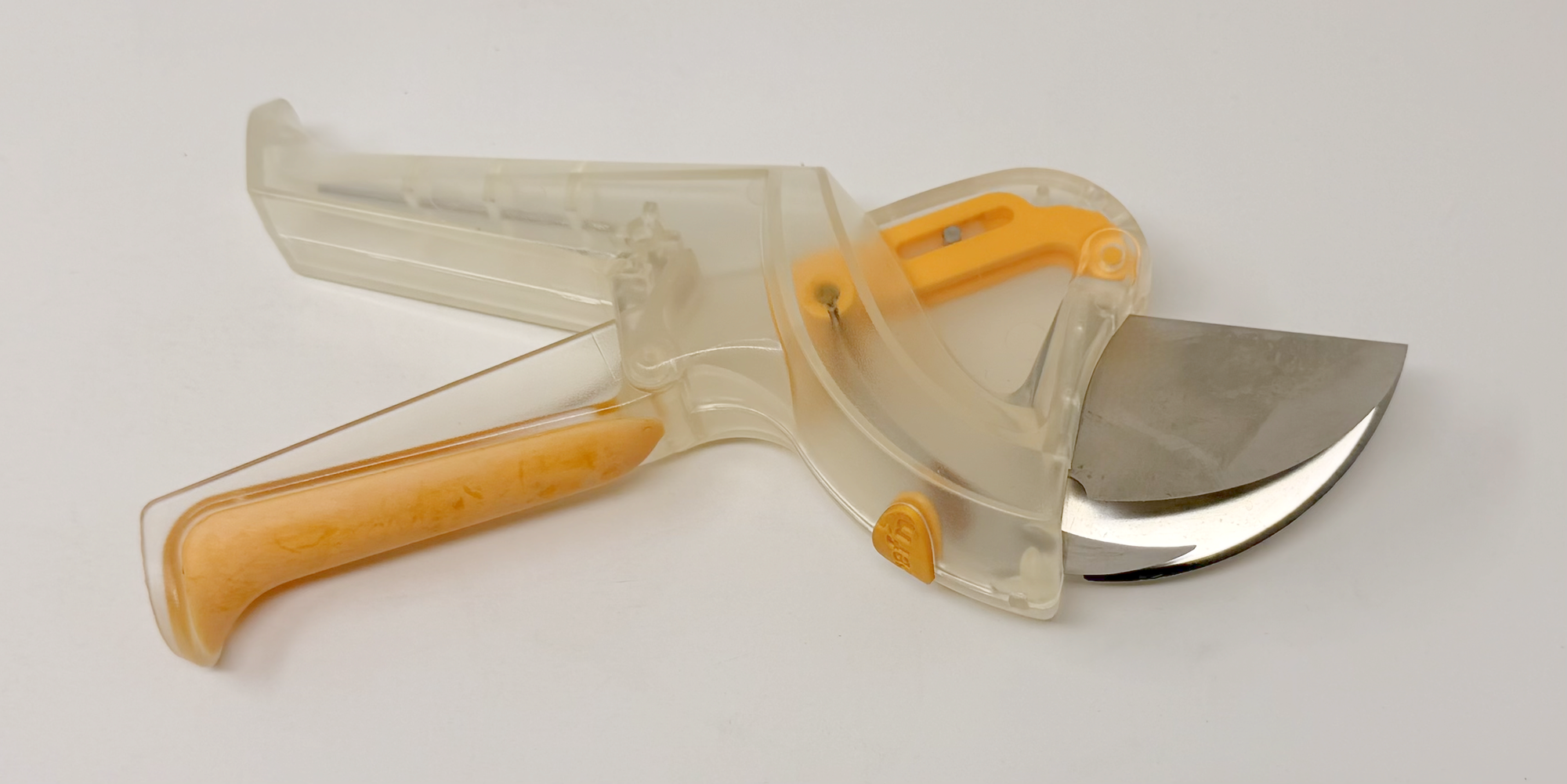
What do you think it is? Look at the parts for evidence.
What does it do?
How does it do it?
What was the inventor’s process to get from idea to a product that still sells?
How long was that process? How many prototypes were made?
Would you have done it?
Find out what it is in Inventor Inquiry Four.
A REAL PROBLEM IS ONLY THE BEGINNING
Sometimes people clearly have a problem and still do nothing about it.
Maybe you should find out why.
They may lack the money to fix it. They may have no authority to change the process. They may dislike the available remedies more than the original difficulty.
Or they may simply have more pressing problems.
Lack of action deserves investigation. It doesn’t explain itself.
And evidence that a problem exists is only part of the work. You will still need to learn whether your solution helps and whether someone will choose it.
One encouraging conversation cannot answer all three questions.
ACT
Before the next expense, do a small investigation.
1. Write down the claim you are testing.
“I believe these people encounter this problem under these circumstances, with these consequences.”
Be specific enough that you could discover you are wrong.
2. Find people who live with the situation.
Start with five to ten conversations, as we suggested in Inquiry Two.
That is a place to begin learning, not a sample that proves the size of your market.
Seek people beyond your personal cheering section.
3. Ask about recent experience.
Let people tell you what happened before you show them your invention.
When practical, ask permission to watch the task or examine the workaround.
Listen for the details. How often? How long? How much? What consequence?
4. Separate what you know from what you think.
Keep a simple record.
What did you observe?
What did the person report?
What did you infer?
Record the exceptions, too. Someone who does not struggle may help you understand exactly why someone else does.
5. Let the evidence choose the next step.
A recurring difficulty with meaningful consequences may justify a small test of your solution.
Mixed findings may mean you need to narrow the customer group or investigate further.
Little evidence of a consequential problem may mean it is time to pause.
You do not need absolute certainty.
You need enough evidence to justify the next commitment. A sketch and a production order should not require the same level of confidence.
WHY IT MATTERS
Finding out that an assumption was wrong can be disappointing.
Finding out while you can still change direction is valuable.
Evidence helps you decide whose problem deserves your attention, what your invention must accomplish, and which expense makes sense next.
Before you improve the prototype...
Before you order tooling...
Before You Spend Another Dollar...
Finish this sentence:
“I know this problem is real because...”
Then put something you have learned after “because.”
Use this evidence to make your next move.
The Series
INVENTOR INQUIRY: ONE to ONE-O-ONE
Before You Spend Another Dollar...
Inventor Inquiry is a continuing series built around 101 questions inventors should answer before investing heavily in an idea.
The complete Questions-Only Q-Sheet is available now, with the expanded Workbook and workshops to follow.
Because a good invention deserves more than enthusiasm.
It deserves inquiry. It deserves evidence. It deserves action.
Thanks for asking.
Member discussion