The World's Most Useful Invention That Nobody Talks About
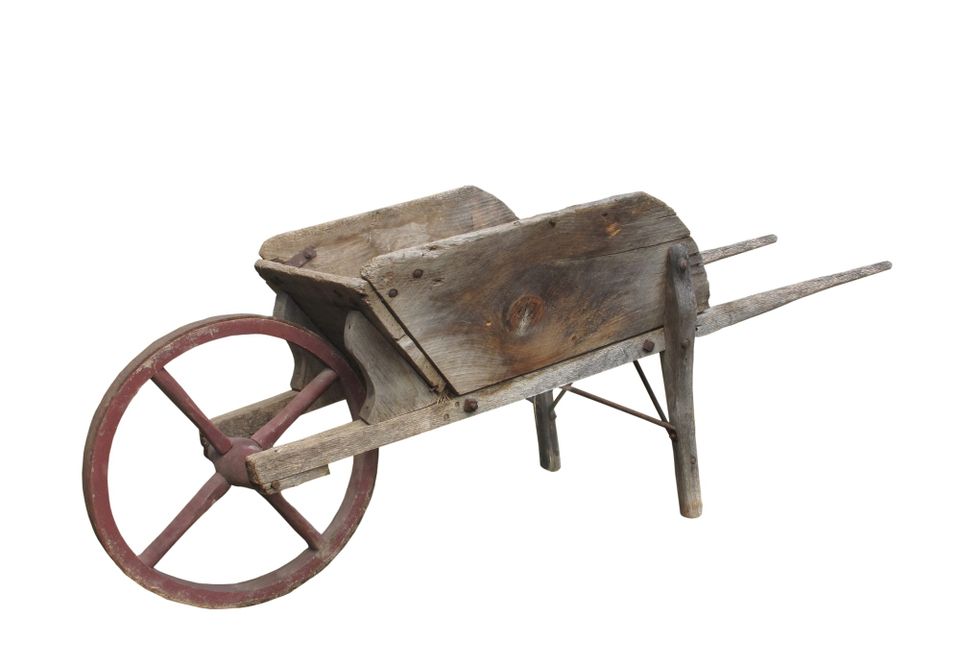
Hint: It has one wheel, two handles, and has been changing lives for over 2,000 years.
Imagine moving 300 pounds of bricks.
Or soil.
Or concrete.
Or vegetables.
Or water.
Now imagine doing it alone.
The difference between carrying that load by hand and rolling it in a wheelbarrow isn't just convenience — it's one of the greatest mechanical advantages ever placed into an everyday tool.
Millions of us use wheelbarrows without giving them a second thought. Yet few inventions have done more to multiply a single person's strength, productivity, and independence.
It's such a familiar object that we've stopped seeing it.
Perhaps that's the greatest compliment an invention can receive.
A simple idea:
One wheel.
Two handles.
One tray.
Nothing more.
Yet those few parts combine three elegant principles:
Leverage.
Balance.
Rolling friction.
Together they allow one person to move loads that would otherwise require several people... or not be moved at all.
Design Questions: Why does a wheelbarrow have only one wheel?
Think about that while we ask more questions:
Why does the wheel carry most of the weight? It's math and physics, but all you need to know is it's a "second-class lever" since the load is behind the fulcrum, or the wheel in this case, reducing the effort to pick up and move the load.
Why do the handles feel lighter? Since the wheelbarrow is a lever, the worker is only lifting a small percentage of the load's weight. The closer the load is to the wheel, or the lever's fulcrum, the lighter the load will feel. If the load is exactly balanced over the wheel, you'd feel hardly any weight at all; however, the tradeoff would be a high center of gravity causing the wheelbarrow to be top-heavy and more apt to tip over. And, if your load is constantly tipping over (and spilling the contents), it sort of defeats the purpose: getting Load A to Point B.
Why is rolling easier than dragging? Again, there's math for this, but most people have experienced the fact that rolling is 90% more efficient than dragging. Dragging or sliding creates friction, and often heat, which makes it harder. Adding a bearing, especially the magical Ball Bearing, reduces friction and makes it easier to move the load.
Why does the center of gravity matter? Center of gravity, CoG, affects both stability [of the load] and ease of use [for the operator].
Why is the good ol' wheelbarrow basically unchanged after centuries? The earliest record of the invention is from the Han Dynasty about 188 BC and the basic design remains essentially unchanged since: wheel, tray, handles. So, if it ain't broke... use it.
So, why does a wheelbarrow have just one wheel? With just one wheel, the operator can easily pivot, steer, and navigate tight or uneven spaces — something much harder with two wheels. The one-wheel design also reduces weight and construction complexity, making the tool lighter and easier to use. Consider the photo below and imagine pulling a heavy load in a four-wheel cart along it vs. pushing a one-wheel-barrow!

Where the wheelbarrow changed the world
Materiel movement. One of the earliest uses was moving military supplies — horses were for generals, not packs.
Construction.
Agriculture.
Mining.
Landscaping.
Disaster relief.
Community gardens.
Developing countries.
Suddenly the humble wheelbarrow becomes a civilization-changing invention. It has literally moved mountains.
Why nobody talks about it
Because the greatest inventions often disappear into everyday life.
We notice smartphones.
We overlook wheelbarrows.
Which of those contributes more to humanity is irrelevant. You can't move 300 pounds with a phone any more than you can make a call on a wheelbarrow.
A haiku:
a wise old tinker
swapped donkey for wheelbarrow
one less mouth to feed
Why It Matters
In an age fascinated by the newest technologies, the wheelbarrow reminds us that truly transformative ideas are often the simplest. The best inventions don't merely solve problems — they become so woven into everyday life that we forget they were once revolutionary.
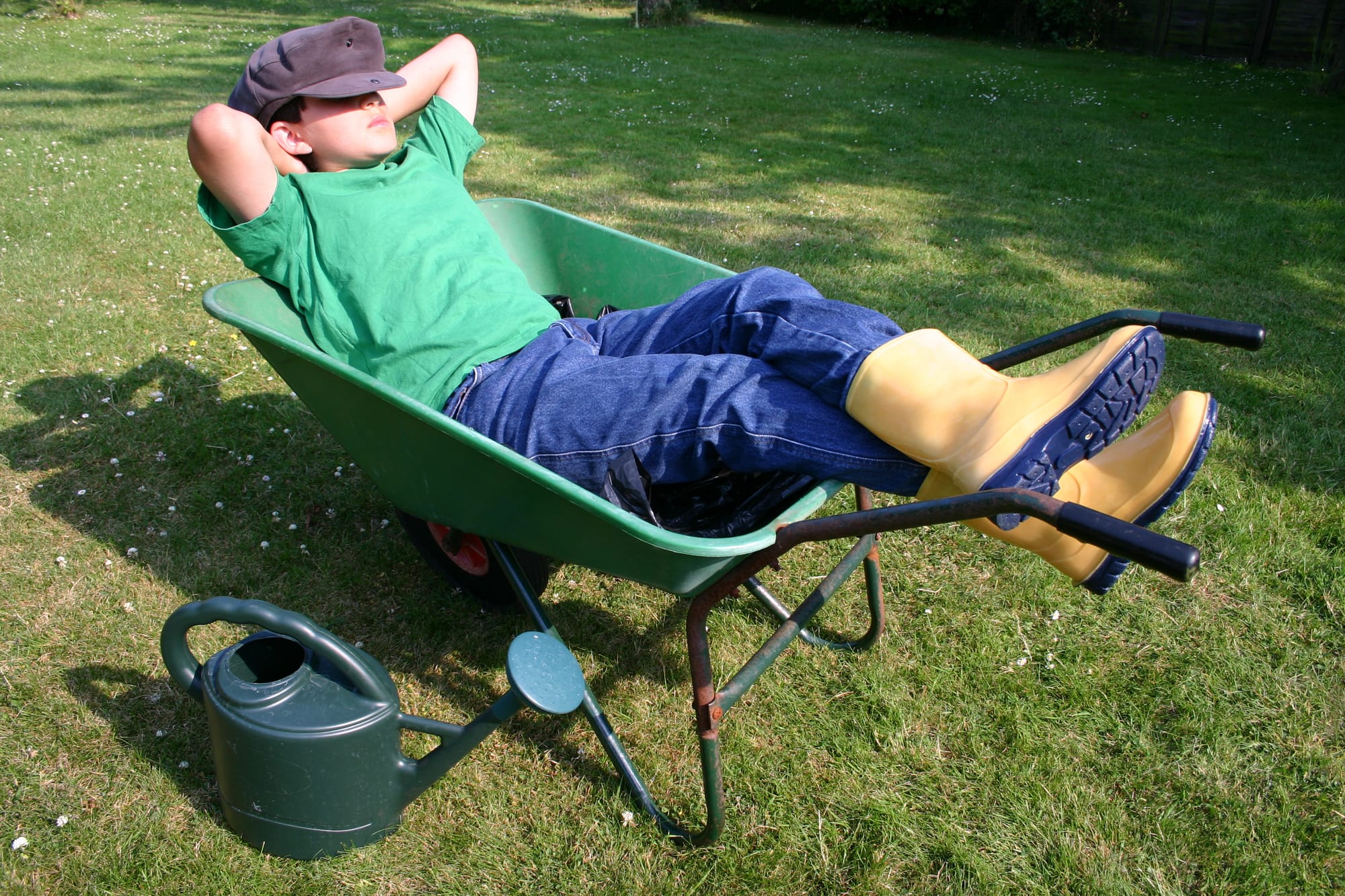
Now, take a load off and relax.
Member discussion